Showing posts with label sciatica natural treatment. Show all posts

Saturday, March 25, 2017

10 Natural Foods to Relieve Sciatic Nerve Pain

Natural Foods That Heal Sciatica

10 Natural Foods to Relieve Sciatic Nerve Pain are the most sought after information today.
You could be dealing with sciatic nerve pain, also called sciatica, which causes painful throbbing in the lower back and limbs.
You’re dealing with a whole lot of discomfort that can quickly ruin your day.
The good news is there are remedies for back pain that treat sciatic nerve pain and improve spine health in a natural way. One of them is choosing the right food.

This article will help you identify what natural foods should be used:

#1.A number of beef eat grass.

Red meat is not recommended for people with back pain and sciatica. However, a small amount of grass beef is needed in your meals.
sciatica foods to avoid
 Help and healing Sciatica with nutrition

#2. Fresh pineapple, berries

These delicious fruits are a supportive inflammatory drug and also boost the immune system. You can eat them delightfully according to your needs.
herniated disc diet
Natural foods for Sciatica

#3. Fish oil

Oily fish such as salmon, sardines, herring and mackerel, and halibut are rich in omega 3 fatty acids.
How much omega 3 should you have a day?
Fish Oil Benefits for Sore Muscles & Nerve Pain

#4. Green tea

Use 2-3 cups of green tea a day with its excellent antioxidant properties. This drink also helps you to stabilize your weight, a great support for back pain relief.
Green tea pain modulating effect in sciatic nerve chronic constriction ...
Benefits of Green Tea: Different Natural Sciatica Treatment Methods

#5. Turmeric, garlic, ginger

They are indispensable spices in every meal.
turmeric for sciatica pain
Ginger for sciatic nerve pain and inflammation - Chronic Pain ...

#6. B vitamins are very important:

They can be found in green beans, spinach, green beans, grains, pinto beans, bananas, sweet potatoes ... Whole grain cereals and breads, whole grains, groundnuts and beans.

Vitamin B for Back Pain
Vitamins for Sciatica |

#7. Foods rich in vitamin A

Vitamin A is found in many dairy products - milk, cheese and yoghurt, carrots, dark green leafy vegetables, oranges. Carotene beta helps to form vitamin A in the body that can be found in Oranges, Yellow Fruits and Vegetables.
vitamin b complex and sciatica
best vitamins for sciatica

#8. Vitamin C

 It is found in fruits, especially citrus, regular and sweet potatoes, cabbage, spinach spinach, tomatoes, and green and yellow vegetables.
Vitamin C and Sciatica
Vitamin C  lower back pain

#9. Vitamins K

This vitamin is found in broccoli and spinach, alfalfa, vegetable oil and grains.
Are you suffering from Lower back pain, calcium and Vitamin D3 ...
How Vitamin K2 Positively Impacts Inflammation

#10. Drink lots of water.

Water is very important for mental health! Water is a great detergent and helps reduce inflammation. Your body needs adequate water to operate at optimal levels. Adults need between 1.5 and 3 liters per day.
Water Can Heal - Is your back pain caused by dehydration
Other tips
Take steps to improve your posture and strengthen your core muscles to prevent recurrences of your sciatica.
If you’d like to read more about this process and get lasting sciatica relief, simply click on the link below.


 For more information about how to Cure Back Pain and Sciatica Naturally, click here.

» Read more

Wednesday, March 22, 2017

Healthy sleeping position supports lower back pain


Choosing the right pillow is necessary for a good health. The correct pillow can keep your spine in the proper position. This reduces stress on your spine and supports the natural curve in your lower back.
Choosing pillow the correct preventing many common back and neck conditions. A pillow that’s too high can put your neck into a risky position. This is Which causes muscle strain on your back, neck and shoulders.
Also, check out my other videos that provide more information on sciatica pain, and how to reduce it.

Choosing the right pillow also depends on your sleeping position.

#1. If you sleep on your side, place a firm pillow between your knees.
This prevents your upper leg from pulling your spine out of alignment, reduces stress on your hips and lower back.
waking up with middle back pain
How should I sleep with upper back pain?
#2. If you sleep on your back, place a small pillow under the back of your knees. This reduces stress on your spine and supports the natural curve in your lower back.
lower back pain in morning after sleeping
#3. If you sleep on your stomach, place a flat pillow under the stomach and pelvis area. This will keep your spine in a better alignment.
comfortable sleeping positions for neck pain
best sleeping position for lower back pain
Your pillow should be adjustable to allow you to sleep in different position. Changing your head position with a pillow can reduce your snoring severity.
how to sleep with lower back pain and sciatica
best healthy sleeping position
After sometime your pillow may not be strong enough to support your body.
It’s recommended that you replace your pillow once a year.
You can find out more about the sciatica treatment that suits you at the link below.


 For more information about how to Cure Back Pain and Sciatica Naturally, click here.
» Read more

Tuesday, March 14, 2017

Natural foods to cure sciatica

best vitamins for sciatica

Natural foods to cure sciatica are always a top concern for those suffering this pain. 
As you know, causes of inflammation causing sciatica can range from a bulging or herniated disc (putting pressure on the spinal nerves), constipation (a surprisingly high number of sciatica sufferers manage to alleviate their pain by altering their diets to avoid constipation that they didn’t realise they had), nutrient deficiencies, infections, diabetes, thyroid disease, metabolism imbalances, gout, alcohol, direct injury-trauma and also stress.You can learn more information about the causes and treatments for sciatica at this link.
natural foods that heal sciatica
Stress is cause of sciatica

What can you do with your diet to control sciatica?

The results will not be immediate if food is the reason for your sciatica. You need to be committed and stick to your dietary changes for at least two weeks before you can assess the results.
There are foods that cause and worsen nerve pain and some that cure and help. I’ve started on a new diet that seems simple and inexpensive. This diet is low in meat and poultry and free of artificial sweeteners and preservatives, all which can worsen nerve pain. My new diet is high in vitamin C, omega 3 fatty acids and B12, all known to provide nerve pain relief and even reverse damage.
sciatic nerve foods to avoid
What Foods Are Good for Sciatica? 

Natural foods to cure sciatica - Use natural treatments to reduce inflammation

These natural foods should be used:
  • Moderate amounts of grass fed beef. Fresh pineapple, berries of all sorts are anti-inflammatory aid healing and also enhance the immune system.
  • Oily fish such as salmon, sardines, herrings and mackerel, and halibut rich in omega 3 fatty acids.
  • 2 – 3 cups of green tea per day with its fabulous anti-oxidant properties
  • Turmeric, garlic, ginger
  • The B vitamins are highly important:
  • They can be found in green peas, spinach, navy beans, nuts, pinto beans, bananas, sweet potatoes... Whole grain fortified cereals and breads, unpolished rice and legumes. 
  • Foods rich in Vitamins A such as dairy products - milk, cheese and yogurt, carrots, dark green leafy vegetables, orange-coloured fruits.The beta carotene that helps the formation of vitamin A in the body can be found in general orange or yellow fruits and vegetables.
  • Vitamin C is found in fruits, especially citrus, regular and sweet potatoes, cabbage, spinach broccoli, tomatoes, and green and yellow vegetables.
  • Vitamin K sources such as broccoli and spinach, alfalfa, vegetable oils and cereals.
  • Drink plenty of water. Water is so important to nerve health! Water is a great detergent and helps reduce inflammation. Your body needs adequate water to function at an optimum level. Adults need between 1.5 – 3 litres a day.
What to eat when you have sciatica?
What foods help heal a sciatica?

Other tips

If your sciatica is not food related be sure to see a doctor to investigate the other possible causes. Take steps to improve your posture and strengthen your core muscles to prevent recurrences of your sciatica.
If you’d like to read more about this process and get lasting sciatica relief, simply click on the link below.


 For more information about how to Cure Back Pain and Sciatica Naturally, click here.
» Read more

Tuesday, May 17, 2016

Sciatica Treatment - Cure Sciatica Naturally

how to get rid of sciatica pain


Sciatica Treatment is really a big problem for us. As you know, severe or ongoing flare-ups of sciatic nerve pain need to treated don't get worse over time. I was curing my pain without medication. 
sciatic nerve stretches
Natural treatment sciatica pain

Readily available nonsurgical remedies and regular exercise will go a long way toward relieving the pain most people experience. Some of the effective strategies I recommend include chiropractic care, yoga, massage, exercises for back pain.
sciatica exercises to avoid
Sciatica treatment exercises

The goals of nonsurgical sciatica treatment are to relieve pain and any neurological symptoms caused by a compressed nerve root. There is a broad range of options available for sciatica treatment. Specific exercises are usually recommended in conjunction with one or more of the treatments below.

Sciatica Treatment #1: Heat - ice

Hot or Cold Treatments for Sciatica
Heat or ice - Treatments for Sciatica

For acute sciatic pain, heat - ice packs are readily available and can help alleviate the leg pain, especially in the initial phase. Ice or heat is usually applied for approximately 20 minutes, and repeated every two hours. Most people use ice first, but some find more relief with heat. It is best to apply ice with a cloth or towel placed between the ice and skin to avoid an ice burn

Sciatica Treatment #2: Chiropractic - manual manipulation

Spinal adjustments and manual manipulation performed by appropriately trained health professionals, such as chiropractors and osteopathic physicians.
what is a chiropractic adjustment
Chiropractic adjustment benefits

Manual manipulation by appropriately trained health professionals can create a better healing environment and should not be painful.

Sciatica Treatment #3: Acupuncture

This practice is centered on the philosophy of achieving or maintaining well-being through the open flow of energy via specific pathways in the body. Hair-thin needles (which are usually not felt) are inserted into the skin near the area of pain.
The U.S. Food and Drug Administration (FDA) approved Acupuncture as a treatment for back pain.The National Institutes of Health has recognized acupuncture as effective in relieving back pain, including sciatica.
acupuncture for sciatica
Acupuncture for Sciatica - back pain

Sciatica Treatment #4: Cognitive behavior therapy

This therapy for taking control and changing self-defeating behaviors can be helpful in managing sciatica pain, particularly in the short term. Sessions with a therapist may be face-to-face or online.

Sciatica Treatment #5: Massage therapy

A number of benefits for sciatica & back pain froms massage therapy including:
  • Increased blood circulation 
  • Muscle relaxation
  • Release of endorphins (the body’s natural pain relievers).
The above list represents the most common treatments but is by no means comprehensive. There are many more options. Patients will often need to use a process of trial and error to find what works best for them.
how to self massage lower back pain
Deep tissue massage for sciatica

Sciatica Treatment #6: Treatment for Recurring Sciatica Pain

For most people, the good news is that sciatica typically gets better on its own. The healing process usually will only take a few days or weeks.
Overall, the vast majority of episodes of sciatica pain subside within a 6- to 12-week time span. Following initial pain relief, need to pursued a program of physical therapy and exercise should usually. This is alleviate pain and prevent or minimize any ongoing sciatic pain.
sciatica exercises to avoid
Treatment for chronic sciatica pain

If you think you have sciatica, call your doctor. The first step toward relieving pain is a proper diagnosis.
How to treat sciatica naturally? You can to learn it here.


For more information about how to Cure Back Pain and Sciatica Naturally, click here.

» Read more

Wednesday, April 20, 2016

Sciatica Cause - Why you get sciatica?

treatment of sciatica#


Sciatica cause - as you know, several lumbar spine, also known as lower back, disorders can cause sciatica. It's often described as mild to intense pain in the left or right leg. Sciatica is caused by compression of one or more of the 5 sets of nerve roots in the lower back. Sometimes doctors call sciatica a radiculopathy. Radiculopathy is a medical term used to describe pain, numbness, tingling, and weakness in the arms or legs caused by a nerve root problem. If the nerve problem is in the neck, it is called a cervical radiculopathy. However, since sciatica affects the low back, it is called a lumbar radiculopathy.You can learn more information about how to Cure Back Pain and Sciatica Naturally at here.

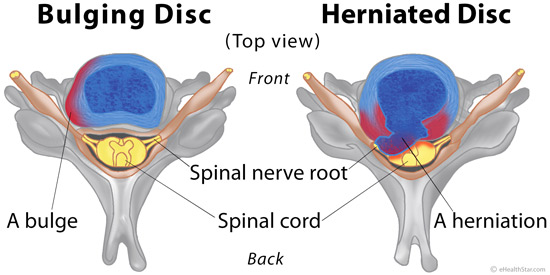
Sciatica cause #1: Lumbar Bulging Disc or Herniated Disc

The 6 most common are:

  • a bulging or herniated disc
  • lumbar spinal stenosis
  • spondylolisthesis
  • trauma
  • piriformis syndrome
  • spinal tumors

There are many terms used to describe spinal disc pathology and associated pain, such as "herniated disc","pinched nerve"and "bulging disc" and all are used differently and, at times, interchangeably.
The medical diagnosis identifies the actual cause of the patient’s back pain, leg pain and other symptoms.
bulging disc symptoms
                      Lumbar Bulging Disc or Herniated Disc
Pain caused by a lumbar herniated disc can seem to occur suddenly, but it is usually the result of a gradual process.
Lumbar herniated discs are a widespread medical problem, most often affecting people age 35 to 50.
Disc herniation symptoms usually start for no apparent reason. Or they may occur when a person lifts something heavy and/or twists the lower back, motions that put added stress on the discs.
The consequences of a herniated disc are worse. Not only does the herniated disc cause direct compression of the nerve root against the interior of the bony spinal canal, but the disc material itself also contains an acidic, chemical irritant (hyaluronic acid) that causes nerve inflammation. In both cases, nerve compression and irritation cause inflammation and pain, often leading to extremity numbness, tingling, and muscle weakness.

Sciatica cause #2: Lumbar spinal stenosis

A common cause of low back and leg pain is lumbar spinal stenosis. As we age, our spines change. These normal wear-and-tear effects of aging can lead to narrowing of the spinal canal. This condition is called spinal stenosis.
Spinal stenosis is a nerve compression disorder most often affecting older adults. Spinal stenosis occurs when the space around the spinal cord narrows. This puts pressure on the spinal cord and the spinal nerve roots, and may cause pain, numbness, or weakness in the legs.
spinal stenosis physical therapy
Lumbar sipnal stenosis
Arthritis is the most common cause of spinal stenosis. Arthritis refers to degeneration of any joint in the body. Another response to arthritis in the lower back is that ligaments around the joints increase in size. This also lessens space for the nerves. Once the space has become small enough to irritate spinal nerves, painful symptoms result.
Symptoms may include:

  • Numbness, weakness, cramping, or pain in the legs, feet, or buttocks. These symptoms get worse when you walk, stand straight, or lean backward. The pain gets better when you sit down or lean forward.
  • Stiffness in the legs and thighs.
  • Low back pain.
  • In severe cases, loss of bladder and bowel control.

Sciatica cause #3: Spondylolisthesis

Spondylolisthesis is a disorder that most often affects the lumbar spine. It is characterized by one vertebra slipping forward over an adjacent vertebra. When a vertebra slips and is displaced, spinal nerve root compression occurs and often causes sciatic leg pain. Spondylolisthesis is categorized as developmental (found at birth, develops during childhood) or acquired from spinal degeneration, trauma or physical stress (eg, lifting weights).
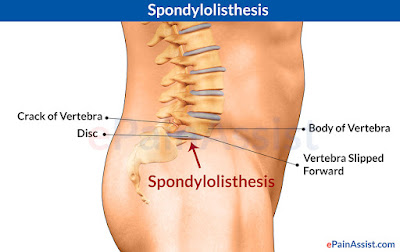
spondylolisthesis
Causes of Pain in the Lumbar Spine
It most often occurs in the lower spine (lumbosacral area). In some cases, this may lead to your spinal cord or nerve roots being squeezed. This can cause back pain and numbness or weakness in one or both legs. In rare cases, it can also lead to losing control over your bladder or bowels. See a doctor right away if you begin losing bladder or bowel control.
Sometimes when a vertebra slips out of place, you may have no symptoms at all or no symptoms until years later. Then, you may have pain in your low back or buttock. Muscles in your leg may feel tight or weak. .You may even limp

Sciatica cause #4: Trauma

Sciatica can result from direct nerve compression caused by external forces to the lumbar or sacral spinal nerve roots. Examples include motor vehicle accidents, falling down, football and other sports. The impact may injure the nerves or, occasionally, fragments of broken bone may compress the nerves.
treatment of sciatica
trauma caused by sports activities

Sciatica cause #5: The piriformis syndrome

Piriformis syndrome is named for the piriformis muscle and the pain caused when the muscle irritates the sciatic nerve. The piriformis muscle is located in the lower part of the spine, connects to the thighbone, and assists in hip rotation. The sciatic nerve runs beneath the piriformis muscle. Piriformis syndrome develops when muscle spasms develop in the piriformis muscle thereby compressing the sciatic nerve.
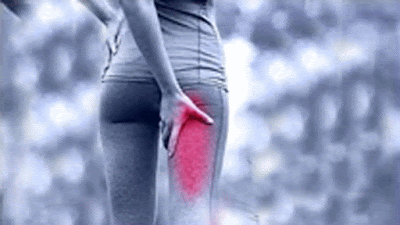
pain treatment naturally
 Sciatica Cause : The Piriformis Syndrome

Until this moment, there is no simple diagnostic test for piriformis syndrome causing irritation of the sciatic nerve. The condition is primarily diagnosed on the basis of the patient’s symptoms and on a physical exam, and after excluding other possible causes of the patient’s pain.
Symptoms of piriformis syndrome often become worse after prolonged sitting, walking or running, and may feel better after lying down on the back.
Most commonly, patients describe acute tenderness in the buttock and sciatica-like pain down the back of the thigh, calf and foot.
Typical piriformis syndrome symptoms may include:
  • A dull ache in the buttock
  • Pain down the back of the thigh, calf and foot (sciatica)
  • Pain when walking up stairs or inclines
  • Increased pain after prolonged sitting
  • Reduced range of motion of the hip joint
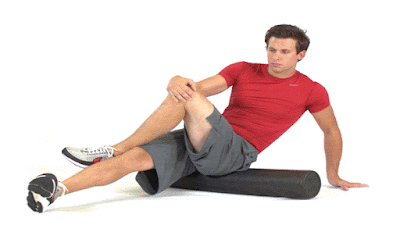
    pain treatment naturally
    Sciatica-like pain down the back of the thigh, calf and foot.

Sciatica cause #6: Spinal tumors

People may have weak muscles, lose sensation in particular areas of the body, or become unable to control bowel and bladder function, it is due to the appearance of tumors.
Tumors that affect the bones of the spine (vertebrae) are known as vertebral tumors. Spinal tumors are abnormal growths that are either benign or cancerous (malignant). Fortunately, spinal tumors are rare. However, when a spinal tumor develops in the lumbar region, there is a risk for sciatica to develop as a result of nerve compression.
Usually these tumors are benign and slow growing. However, they can cause symptoms of pain and weakness.
Some common spinal cancer symptoms include pain, numbness, weakness and difficulty with urination.
The symptoms of spinal cancer may occur very slowly. Other times, they occur quickly, even over a matter of hours or days. Metastatic spinal tumors, which have spread to the spine from another location in the body, often progress quickly.

pain treatment naturally

Sciatica Cause: Spinal Tumors

The following general symptoms may be associated with a spinal tumor:
  • Pain in the neck or back, followed by neurological problems (such as weakness or numbness of the arms or legs or a change in normal bowel or bladder habits) is most common
  • Focal spine pain that is worse in the morning
  • Pain that is severe when there is direct manipulation or compression of the affected area of the spine
  • Pain that does not diminish with rest, and pain that may be worse at night than during the day
  • Back pain along with constitutional symptoms, such as loss of appetite, unplanned weight loss, nausea, vomiting, or fever, chills or shakes.
Tumors from other parts of the body can spread (metastasize) to the vertebrae, the supporting network around the spinal cord or, in rare cases, the spinal cord itself.
Spinal tumors or growths of any kind can lead to pain, neurological problems and sometimes paralysis. Whether cancerous or not, a spinal tumor can be life-threatening and cause permanent disability.
Treatment for a spinal tumor may include surgery, radiation therapy, chemotherapy or other medications.

If you think you have sciatica, call your doctor. The first step toward relieving pain is a proper diagnosis.
You can also learn how to treat natural sciatica disease at link below.


 For more information about how to Cure Back Pain and Sciatica Naturally, click here.

» Read more